
It’s common in Hollywood for movies to play it safe, especially with the state of the movie industry today. Film budgets continue to skyrocket to the hundreds of millions of dollars, and you want to make sure you’re making a profit. Taking a massive risk isn’t always worth it, but not every movie agrees.
Sometimes, that massive creative risk can not only pay off in the end but also lead to tremendous success. In an era when audiences crave unique, original ideas, some studios are more than up to the task and deliver. Most of the time, it feels like these risky movies come from smaller studios that release more indie-style films. We will, however, see these types of risks pay off for bigger studios from time to time.
They say fortune favors the bold for a reason, and these films prove that famous phrase to be true.
Memento

Christopher Nolan was not a household name when Memento was released in 2000.
Audiences today would surely be up for the creative risk of the entire film telling its story backwards. Back then, however, it was a different story.
Thankfully, it’s a risk that paid off. Not only did Nolan’s career continue to flourish, but Memento is still seen as the perfect example of unique and original filmmaking.
Pulp Fiction

Speaking of iconic directors before they saw mainstream success, this feels like the perfect segue to bring up Quentin Tarantino.
There were a lot of things that Pulp Fiction did on release that were seen as risky: the non-linear storytelling was not only new, it also helped deliver the plot twist of one of its lead actors being killed off halfway through the movie.
Then there was the hallmark of any Tarantino film that we love today: long conversations between its characters that have nothing to do with the plot. They don’t drive the story forward, running the risk of alienating the audience, but the dialogue is so entertaining that we’ll gladly keep watching.
Sin City

Frank Miller has plenty of star power in the world of graphic novels, but there was no guarantee that it would translate to a big-screen adaptation.
Add in the unique and creative visual style of Sin City, and you can understand why studios would be a little uneasy about greenlighting the film. Sure, there’s plenty of starpower on display from its cast, but a modern noir with a black and white visual asthetic? There’s no guarantee it would succeed.
Against all odds, Sin City did, bringing home over $150 million at the box office.
Follow Outrun Gaming on MSN for more content you love.
Toy Story

Hindsight is obviously 20/20 here, not only with how massive the Toy Story franchise and Pixar in general are today. Consider, though, the limitations of computer animation in 1995.
Pixar had to pull so many shortcuts just for the movie to work, and even then, there was the question about whether or not audiences were willing to accept the new computer animation over the more traditional hand-drawn style we were already accustomed to.
The rest, as they say, is history. Toy Story was a huge success, Pixar began its domination in the animated movie industry, and other studios followed suit to adopt more computer animation over the now old-fashioned hand-drawn style.
Romeo + Juliet

If we’re talking creative risks, it only makes sense to discuss Baz Luhrmann. The Australian director is known for his arthouse style of filmmaking and has never been shy of taking massive swings when making films.
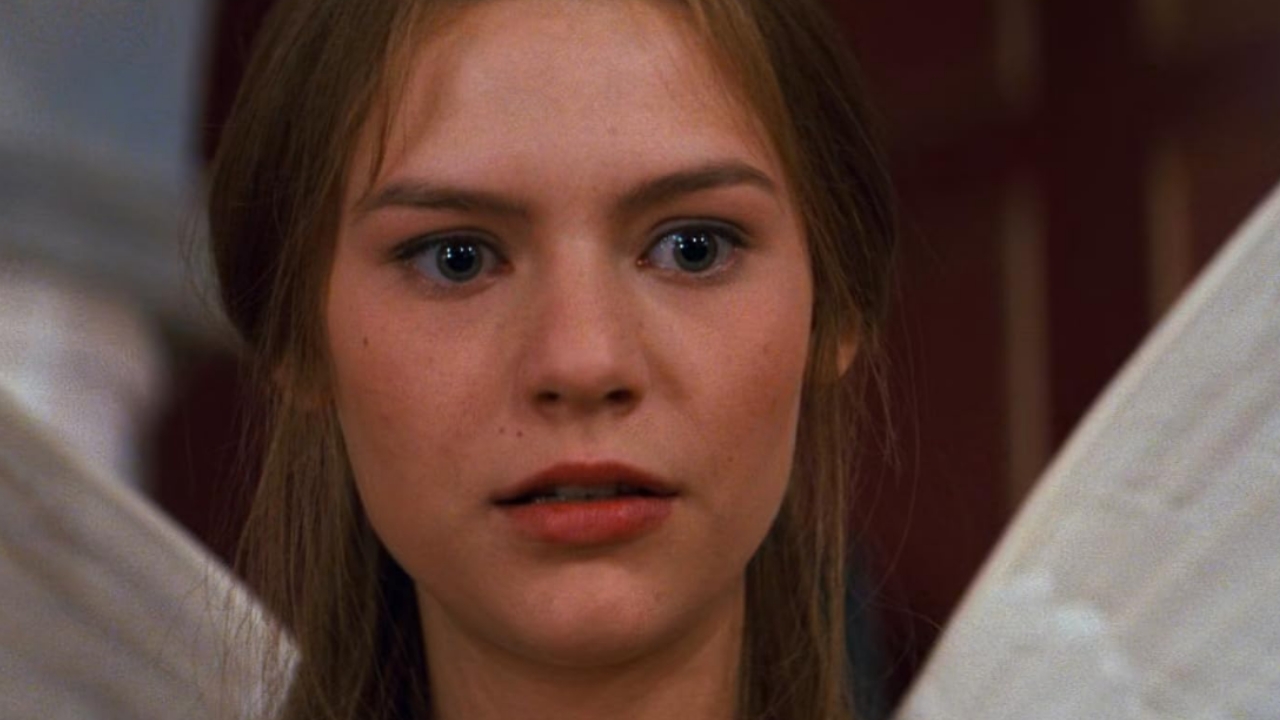
The best example of that from his filmography may be Romeo + Juliet, which keeps the original dialogue from William Shakespeare. One thing it doesn’t keep, however, is the setting.
Instead of taking place in the late 1500s, Romeo + Juliet has a modern-day backdrop, with modern-day aesthetics. It results in some crazy, over-the-top play on words, but it’s still unique enough to be worth your time.
The Matrix

From the topic of computer animation to computer effects, The Matrix is a revolutionary film that showcased what was possible with excellent CGI, accompanied by innovative practical stunts.
Still, despite all the success the franchise has seen over the years, it was an incredibly risky endeavor. The biggest reason for that has to do with the state of mainstream culture in the late 90s.
Anime was nowhere near as popular as it is today, and making what was essentially a kung-fu movie with anime and cyberpunk themes back then was a huge gamble.
Drive

One of the best things about a movie is that it’s a visual medium. It’s not just about the dialogue spoken between characters, but also what’s happening on screen.
Sometimes, a film takes full advantage of the power of the visual medium, relying more on the action on screen than the lines of dialogue from a script.
Drive is a perfect example of that, relying on non-verbal storytelling, along with a killer soundtrack, to tell its story.
Who Framed Roger Rabbit?

Let’s take a step back to the world of animation for a second.
Who Framed Roger Rabbit could have failed for so many reasons. It’s a movie that stars cartoon characters, but it’s ultimately an adult story. It’s also already a neo-noir film, which is something that’s difficult enough to pull off on its own. Then, of course, you have to make it look convincing that Bob Hopskins is interacting with cartoon characters.
Yet despite all the obstacles and the risk, Who Framed Roger Rabbit is a massive achievement.
Predator

It’s common for movies to employ a mid-film genre swap today. Predator is not a modern movie, though.
What starts as a band of brothers type film transitions to a survival horror, and then into a last man standing action flick by its third act.
For a movie to pull this genre swap off twice, especially back then, was not only risky but truly impressive.
Guardians of the Galaxy

Remember in the intro when I hinted that big studios sometimes took massive risks? Here’s one example.
Marvel was on top of the world following the success of the MCU, and they clearly had bigger plans while slowly building up to a showdown with Thanos in Infinity War and Endgame. In order to succeed, Marvel was going to have to bring in some lesser-known names.
Enter Guardians of the Galaxy, which features a talking raccoon and Vin Diesel as a tree who can only say “I am Groot.” Also, this was when Chris Pratt was only known as the dorky guy from Parks and Rec. It was a massive gamble!
Thor Ragnarok

Let’s talk about another Marvel IP, only this time, it’s a hero who was there from the start.
The first Thor film was okay at best. The second was a complete disaster. Still, they couldn’t ignore Thor as a character; he’s too important to the overall plot of the Infinity Saga.
Thor Ragnarok was a massive tonal shift for the character, diving more into a comedic role than a serious one. It was a huge risk that paid off in Ragnarok, though ironically, Love and Thunder proved that you can’t capture lightning in a bottle twice.
Iron Man

Okay, one more MCU example.
When you think of the most iconic Marvel heroes, you think of Captain America and Spider-Man. You do not think of Iron Man, and even if you did, you most certainly did not think to have mid-2000s Robert Downey Jr. play Tony Stark.
It turns out, however, that it was the perfect choice. A massive risk, but a choice that set in motion one of the most profitable movie franchises ever.
Follow Outrun Gaming on MSN for more content you love.
Read more from us:


