
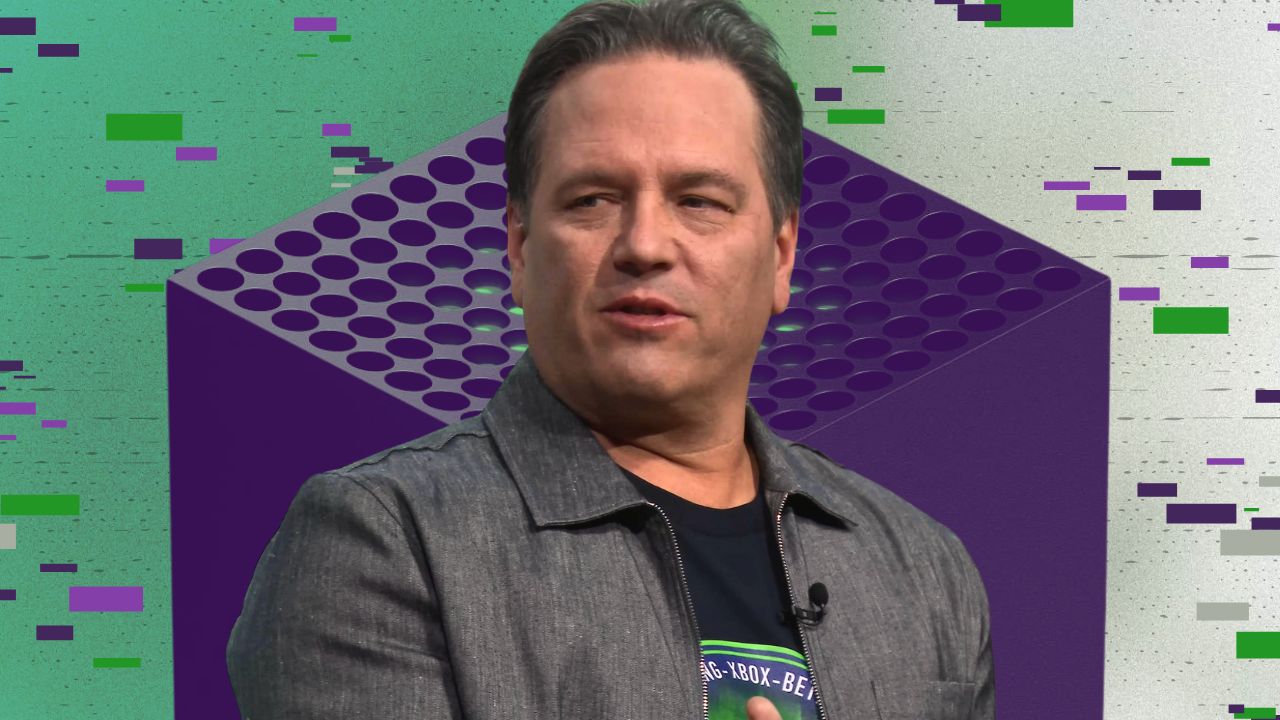
Phil Spencer’s sudden departure from Microsoft on Friday was a pretty big shock, especially after 38 years with the company. This was the man who was a breath of fresh air after the disastrous leadership of Dom Mattrick. He was a gamer, just like us. He wore t-shirts of cool cult-classic games, just like us. He knew the importance of accessibility and affordability in playing our favorite games, how and where we want, just like us.
He also arguably steered the Xbox brand toward irrelevance.
To call Spencer’s legacy as Xbox head and Microsoft Gaming CEO “complicated” is putting it mildly. Microsoft’s Xbox Game Pass, a monthly subscription-based games library once touted as the best deal in gaming — and one of Spencer’s defining initiatives — saw a spike in cancellations following a controversial price hike back in October 2025. Xbox-exclusive games are a thing of the past; Halo is releasing on PlayStation 5 later this year, alongside several other first-party games.
Spencer went on a massive spending spree over the years, acquiring industry behemoths Bethesda and Activision Blizzard King (ABK), and creating brand-new studios comprising “the best of the best,” such as The Initiative. That studio closed down last year, leading to the cancellation of its planned Perfect Dark reboot.
The remake was among last year’s many closures and cancellations, and, ironically, served as the perfect metaphor for Spencer’s tenure: so much promise, so little fulfilled.
Xbox’s (former) knight in shining armor

Following the Xbox One’s disastrous launch, the brand had lost virtually all the goodwill it had built up from the Xbox 360 days. Even then, we look back at the Xbox 360 and think of its exclusive games. The console itself, however, was so poorly built that it became infamous for breaking down. Despite system concerns, many of us still consider it the place to play games.
While the Xbox One was built better, the company — then led by Mattrick — made some baffling decisions. At times, the Xbox One felt more like a movie- or TV-viewing medium than a game console. Xbox seemed to place greater emphasis on the Xbox Kinect, Microsoft’s motion-control peripheral designed to capture the Nintendo Wii crowd, than on traditional games. The house of Halo and Gears of War seemed far more interested in Dance Central.
On top of that, the constant online requirements required Xbox One owners to maintain an internet connection to play, which rubbed everyone the wrong way. In response to concerns, Mattrick responded, “Fortunately, we have a product for people who aren’t able to get some form of connectivity; it’s called Xbox 360.” Combined with their war on used games, brilliantly countered by Sony at E3 2013 with that iconic “How to Share Games on PS4” presentation, the “console war” was over before it began.
Xbox was in dire need of change, and that change appeared to come under Phil Spencer’s leadership. It was a return to catering to the gaming demographic with Xbox, along with the IPs and brands that helped the new kid on the block build a strong, loyal audience in the 2000s. Spencer said all the right things. He brought Bethesda into the Microsoft family. He stressed the importance of delivering great games. He had us rooting for industry consolidation. He was seen as a champion of gaming for the gamers, yet here we are in 2026, left wondering if Xbox even has a future in the industry.
It wasn’t supposed to be like this, though. Spencer was a longtime Microsoft veteran, first joining the company as an intern in 1988 and working his way up the ranks. He was the General Manager of Microsoft Studios in the early 2000s, worked alongside Lionhead and Rare in the mid to late 2000s, and continued to rise through the ranks until taking over for Matrick in 2013.
Under his watch, Xbox expanded cross-platform support, letting players seamlessly switch between console and PC. Spencer understood the importance of backward compatibility, letting us play our favorite Xbox and Xbox 360 games on modern consoles. His biggest initiative, however, was Xbox Game Pass, a subscription service that let you pay a monthly fee to pick and choose from a library of games. While these have become commonplace today, Xbox Game Pass had one signature hook: all first-party games launched on the service on release day.
The service was an incredible, consumer-friendly offering, especially at its then-modest price point. Such value made it worthwhile to be part of the Xbox ecosystem, and ultimately, that’s the issue. I didn’t say Xbox console for a reason; Xbox hardware has, by and large, become less and less important over time — an issue that’s likely to be the biggest takeaway from Spencer’s legacy.
Xbox console’s future was constantly questioned until Spencer’s departure

For someone billed as the savior of Xbox, Spencer is leaving the brand with far more uncertainty than he entered with.
I know that seems incredibly hyperbolic, but no one was asking whether the Xbox One would be the last Xbox console ever made. There were still a plethora of great IPs and studios under the Xbox brand, something that has only grown over the years.
At the top of this piece, I talked about his biggest acquisitions in both Bethesda and ABK. The Initiative was founded as, and I’m serious here, a AAAA studio. They acquired Obsidian Entertainment, Ninja Theory, inExile Entertainment, and several others. There is legitimately a lot of horsepower under the hood at Microsoft Gaming, but when it comes to first-party games, they have fallen far behind the competition.
That’s not to say that these studios haven’t made great games; they most certainly have. The problem, though, has been that these games failed to achieve the same level of success as the competition. Sony and Nintendo’s first-party release calendars were overflowing with critical and commercial hits. The Nintendo Switch and PlayStation 5 have bona fide system-sellers. The Xbox Series X|S does not, and even if it did, why wouldn’t you wait to play that game on another platform?
This was not a winning strategy long-term, and I’m failing to see the rationale for all the investments the company made under Spencer’s watch. Sure, they now have the money-making machine that is Call of Duty under their belt, but you can play that anywhere else. Even if those formerly exclusive first-party games were still exclusive, none of them are system sellers.
It wasn’t supposed to be like this, though. Spencer was a longtime Microsoft veteran.
Halo has lost all cultural relevance. Gears of War ended its last game, Gears 5, on a cliffhanger, though it is finally returning after all these years in the form of a prequel, as if it’s attempting to fix the post-360 trilogy’s mistakes. The long-awaited Fable reboot has been in development for what feels like an eternity. Fallout, one of their most popular and iconic brands, will most likely not see a mainline game release until the early 2030s — and that’s being optimistic. The Perfect Dark reboot was put out of its misery last year. Remember Contraband from Avalanche Studios? Yeah, that never saw the light of day aside from a teaser trailer from what feels like a decade ago.
Oh, and through all of this, Xbox Game Pass saw that poorly timed price hike.
The ironic thing is that you still saved money with a Game Pass subscription thanks to all the first-party games that Microsoft released last year. The issue, again, however, is that said first-party lineup pales in comparison to the competition. Combine that with the Xbox brand’s still-poor messaging, something that has been consistent under Mattrick and Spencer’s leadership, and honestly, it’s not a surprise we’ve ended up here.
Phil Spencer was supposed to save the day. For a while, it looked like he was.
However, he failed to deliver where it mattered most: the games. Under Spencer’s leadership, Halo has become an afterthought in the industry, largely due to the mismanagement of Halo Studios, formerly known as 343 Industries. Gears of War, the Xbox 360’s killer app, has fallen by the wayside. The former iconic Rare franchises, such as Perfect Dark, Banjo-Kazooie, and Conker‘s Bad Fur Day, are long dormant or stuck in development purgatory.
Perhaps this is why new Microsoft Gaming CEO Asha Sharma talked about leaning into what they already have: iconic teams, characters, and worlds that people love. I know the franchises in Microsoft’s portfolio. You know them. I think Microsoft knows them, too. At the end of the day, though, from 2013 through 2026, we didn’t see any of that from Phil Spencer’s Xbox. All we saw was the company spending a lot of money to acquire a boatload of talent, but never delivering anything worth that investment.
For the record, I also understand that console sales for the Xbox Series X|S have been lagging behind its predecessors, even the Xbox One. You can’t say that recent developments are the sole reason for this change in leadership. Of course, the Xbox Series X|S launched under Spencer’s leadership; there’s no blaming Don Mattrick on that one.
‘This is an Xbox’: Brand’s latest strategy alienated console fans

A new report from The Verge contextualizes Microsoft and Spencer’s split as well as the departure of Sarah Bond.
Recently, there’s been a larger push from Xbox touting the console’s online ecosystem. I’m sure you’ve all seen the “This is an Xbox” ads that proudly explain how any device, i.e., a computer, laptop, tablet, or even certain competing hardware options, is just as much of an Xbox as an, well, Xbox.
You could argue that the strategy is a little too effective; why would you spend money on an Xbox Series X when your phone was just as effective at playing your favorite Xbox games? Or, if you’re already playing on a PlayStation 5 for Sony’s premiere exclusives, what’s the point in also buying an Xbox when Forza Horizon, Indiana Jones and the Great Circle, and the Halo franchise will all make their way to the PS5 as well?
These are the hypotheticals a lot of gamers have been asking for the past few years, even before the “This is an Xbox” campaign started. What was the point of buying an Xbox when I can just play these games on PC? Then that compounded to, “Wait, I can play these games on PS5 in addition to first-party Sony games? Sign me up.”
Ultimately, Xbox’s stellar but limited first-party lineup wasn’t capable of selling systems like Nintendo and Sony’s first-party titles. It’s not due to a lack of quality, but a lack of exclusivity. You didn’t need to own an Xbox to buy them; you already had one.
So, as Xbox looks to the future, it needs to find a way to change its public perception. Over the past ten-plus years under Spencer’s leadership, the brand went from delivering a plethora of great, exclusive games in the late 2000s and early 2010s to being better known for massive layoffs and studio closures.


